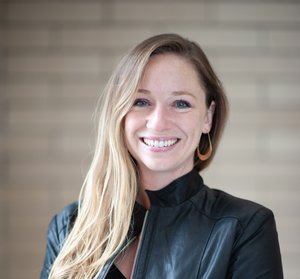
Maddie Bryant, M.A. Candidate and IGLI RA

“In these incredibly difficult moments we're all experiencing, witnessing, and working within, I think there's room to hold rage and pain in the same hand as joy and hope. Sometimes it's all we can do. But they can coexist, and they can inspire and push each other.”
- Julia Zulver
On March 9, the day after International Women's Day, IGLI brought together a panel of feminist organizers, lawyers, and scholars for a one-hour webinar. Moderated by IGLI Director Marie Berry, it featured Catalina Martínez Coral (Center for Reproductive Rights), Ruth Mumbi (Women Collective Kenya), Cathi Choi (Women Cross DMZ), and Dr. Julia Zulver (Swedish Defence University).
The conversation was born out of a hard moment. War, democratic decline, and rollbacks of women's rights were weighing on the feminist community, and the panel opened by remembering Iraqi feminist Yanar Mohammed, who was assassinated just weeks earlier. But the goal was to name the victories unfolding alongside the horror, and to ask what makes it possible to keep going. Here's what stood out.
Key Takeaways
Feminist wins matter most when the world feels regressive
Feminist movements are increasingly confronting war, democratic decline, violence, and rollbacks of rights. Naming victories isn’t a denial oaf that reality, but rather a way of refusing to let despair erase the progress that is being made.
Joy and celebration are political resources
Movements need to mark even small victories, because collective celebration sustains people through long fights. As Ruth Mumbi put it, feminism is joy, and when a movement loses that, it starts to falter.
Changing laws is important, but it isn’t enough
Drawing on abortion rights victories in Argentina, Mexico, and Colombia, Catalina Martínez Coral explained that litigation works best alongside advocacy, communications, public education, and mass mobilization. The goal is the social and cultural decriminalization of abortion, not just the legal kind.
Legal strategy and public mobilization reinforce one another
Courts can change formal rules, but movements change the social environment and stigma those rules operate in. Cathi Choi echoed this on South Korea's camptown lawsuits: legal wins are often imperfect, but litigation can open doors, spark public attention, and create openings for education and redress.
Women experiencing crisis are political actors, not passive victims
Ruth Mumbi described women living amid poverty, displacement, and violence as organizers, caregivers, strategists, and movement builders. Her example: Mama's Kitchen, a survivor-led "political kitchen" that doubles as a livelihood project and a space for healing and consciousness-building.
Preserving historical memory is part of justice
Movements fight over laws and policies, but also over whose experiences are remembered. Activists in Dongducheon, South Korea, have camped for over 550 days to preserve a former detention site for women forced into military camptowns, so the history can't be erased or repeated.
Feminist solidarity is transnational
Systems of power cross borders, so feminist analysis and action must too. Women Cross DMZ pairs South Korean activism with US-based advocacy, education, and demands for accountability, including a letter from over 100 global women leaders urging a Congressional investigation.
Hope isn’t believing everything will work out; it’s a practice
Julia Zulver framed hope as resistance, a muscle to be flexed, one that can sit alongside rage and pain. For the panelists, it comes from solidarity, mutual aid, and the ability to keep laughing even in dire circumstances.
Victory is more than an outcome
Perhaps the most lasting idea of the hour: feminist victory is also the collective capacity built in the pursuit of it, the networks, trust, and imagination that outlast any single ruling or campaign.
“For me, like my sisters said, (hope is) the solidarity our communities continue to build. A good example: back home, when there's been massive flooding, communities come together to feed one another and hold each other, turning solidarity into survival when institutions fail.”
- Ruth Mumbi
Speaker Bios
Cathi Choi, Women Cross DMZ - Cathi Choi (she/her) is the Executive Director of Women Cross DMZ, a global movement of activists mobilizing to end the Korean War, reunite families, and ensure feminist leadership in peacebuilding. She co-coordinates the Korea Peace Now! Grassroots Network, launched in 2019 to organize communities in calling for demilitarization and lasting peace on the Korean Peninsula. She is the Program Committee Co-Chair for GYOPO, a collective of diasporic Korean cultural producers and arts professionals generating progressive, critical, intersectional, and intergenerational discourses, community alliances, and free educational programs.
Ruth Mumbi, Women Collective Kenya - Ruth Mumbi is a Kenyan feminist organizer, reproductive justice advocate, and co-founder of Women Collective Kenya (WCK), working at the intersection of gender justice, economic justice, reproductive rights, and community survival. Her activism is rooted in frontline struggles - from defending communities against forced evictions, to supporting women detained in hospitals after childbirth, to building solidarity economies with elderly women resisting displacement. She is widely recognized for her bold defense of access to safe abortion and was the third petitioner in the landmark 2015 ruling on safe and legal abortion in Kenya, widely known as the JMM case, which continues to set important precedent across the continent. In 2013, she was a finalist for the Front Line Defenders Award for Human Rights Defenders at Risk. She sits on the advisory committee of the Africa Water Justice Network. Her leadership during the Kariobangi evictions and her long-standing commitment to grassroots feminist organizing center poor and working-class women at the heart of resistance and transformation. Ruth’s work bridges care and resistance. She has mobilized emergency mutual aid during floods, led online fundraising efforts for adolescent mothers detained in hospitals after childbirth, and supported two girls to continue their education after losing their mother to an unsafe abortion. She has organized healing and strategy spaces for African feminist activists and supported survivors of sexual and gender-based violence - particularly women affected by unsafe abortions - facing stigma and violence in rural communities. She continues to challenge privatization, patriarchy, and state violence while building alternative futures grounded in dignity, autonomy, and collective care.
Catalina Martínez Coral, Center for Reproductive Rights - Catalina is a feminist from Cali, Colombia. She is currently the Vice President for Latin America and the Caribbean of the Center for Reproductive Rights. She is a member of the Causa Justa movement and one of the plaintiffs in the historic ruling that partially decriminalized abortion in Colombia. She was one of lawyers who litigated the Guzmán Albarracín v. Ecuador and Manuela v. El Salvador cases before the Inter-American Court of Human Rights. She is also part of the They are Girls, Not Mothers movement and was one of the litigants who presented the cases of that campaign before the UN Human Rights Committee.
Julia Zulver, Swedish Defence University - Dr Julia Zulver is feminist academic and practitioner passionate about the rights of women and girls in communities experiencing violence in Latin America. She is a Wallenberg Academy Fellow at the Swedish Defence University, where she researches feminist responses to backlash. Prior to this, she was a Marie Skłodowska-Curie Research Fellow at Oxford and the UNAM. Her award-winning book “High-Risk Feminism in Colombia” was published in English by Rutgers University Press (2022) and in Spanish by Ediciones Uniandes (2022). Her co-edited book “Brave Women: Fighting for Justice in the 21st Century” was published by Palgrave in 2025. She is a Senior Researcher for the feminist research consultancy, Ladysmith. She publishes widely in both academic (Journal of Peace Research, International Feminist Journal of Politics, Gender and Development, European Journal of Politics and Gender, Gender, Place, and Culture, amongst others) and public-facing platforms (CNN, Washington Post, the Guardian, the BBC, the Carnegie Endowment for Democracy, the Wilson Center, amongst others).

Feminist WINS
✶
Social Movements
✶
Feminist WINS ✶ Social Movements ✶
Author Bio
Maddie Bryant is a graduate student at the Josef Korbel School of Global and Public Affairs at the University of Denver. She holds a BA in International Studies, with a secondary major in Psychology, also from the University of Denver. She is currently pursuing an MA in Global Economic Affairs. She hopes to pursue a career advising on complex international legal and policy challenges, particularly those involving conflict, treaty frameworks, and institutional accountability.